1
Kernel grade and low-temp control
Confirm the feed starting point
Whole seed, kernels, screened feed, moisture, and impurities change pretreatment and press rhythm.
See feed prepAlmond oil serves two distinct markets from one press: gourmet culinary oil valued for flavor and clarity, and cosmetic-grade oil valued for lot consistency and specification compliance. The project brief should stay anchored to that dual-market reality.
This almond project does not start with press tonnage. It starts with the kernel-table decision — blanched or natural — and the market question — culinary or cosmetic. These two choices determine filtration protocol, testing requirements, packaging format, and project economics.
Fast inquiry
Almond oil splits into two worlds at the kernel table. Blanched kernels produce pale, mild oil prized by cosmetic formulators and gourmet chefs. Natural kernels with skins yield a warmer, more aromatic oil with deeper color. The skin decision changes filtration, color target, and finished-oil expectations — it must be stated before any pressing discussion.
Use this local workshop video as the press-cell reference until a dedicated almond clip is added. The almond copy around it stays focused on low-temperature cycles, clean lots, and short-run quality.
Almond oil pressing is closer to artisan food or cosmetic-ingredient production than to industrial oilseed processing. The press cell must maintain low temperature, gentle rhythm, and clean batch separation. Multi-client or multi-SKU operations need fast, traceable changeovers.
Culinary almond oil cares about flavor, clarity, and bottle presentation. Cosmetic-grade oil cares about lot consistency, peroxide value, and repeatable specifications. These are different downstream businesses that happen to share the same hydraulic press.
From raw material to finished oil — design, manufacturing, installation, and technical support for small to large-scale oil plants. Qingzhou, Weifang, Shandong Province, China.
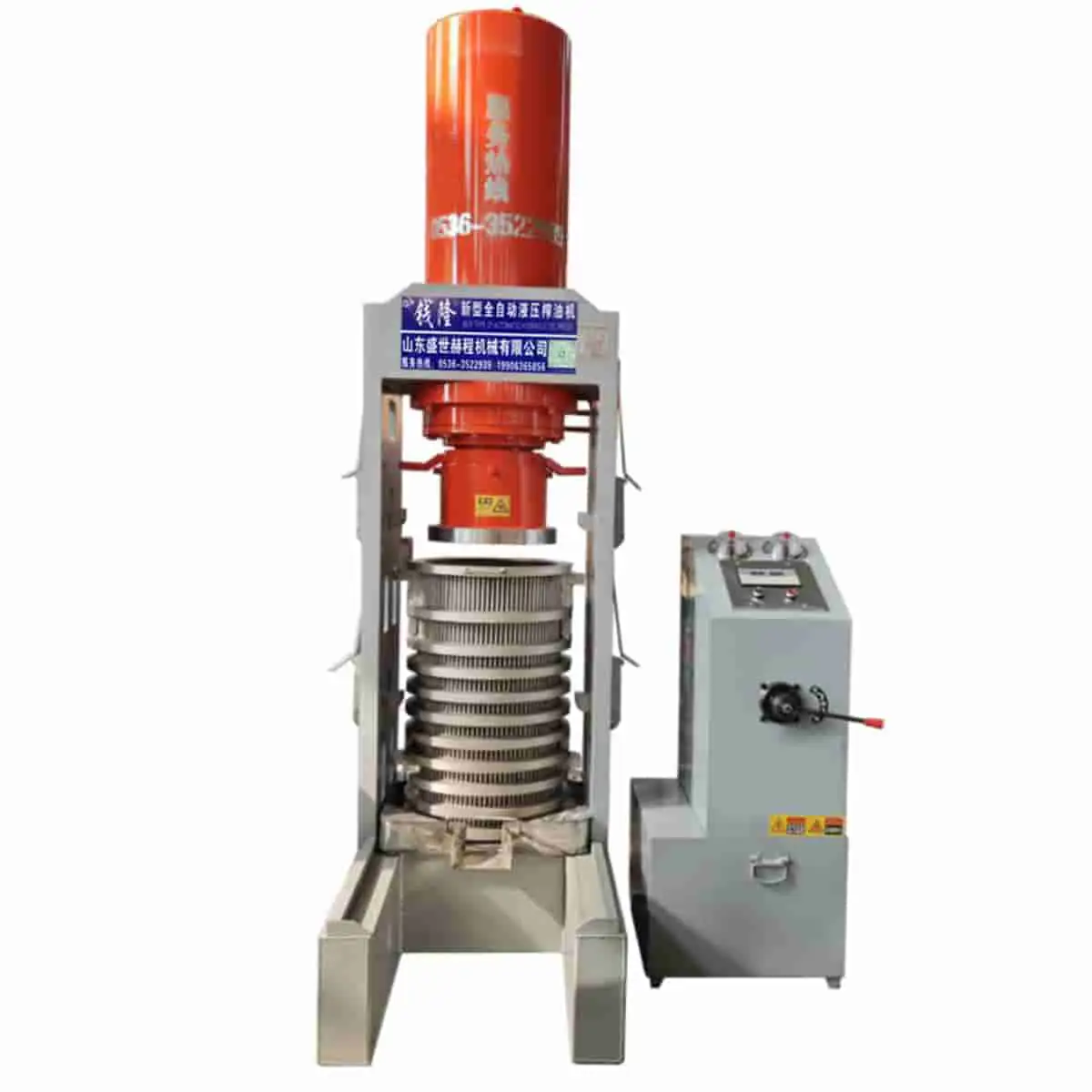
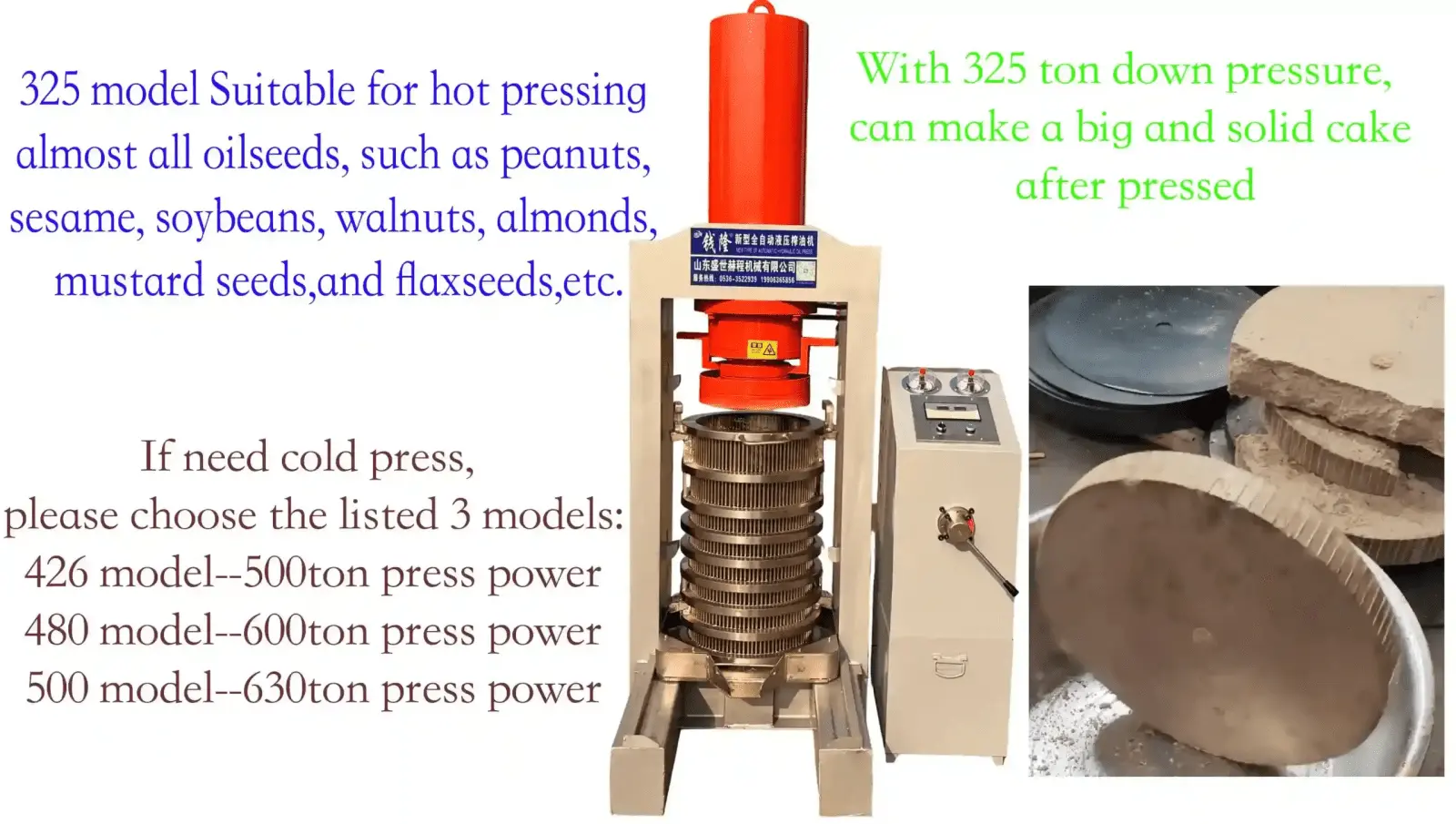
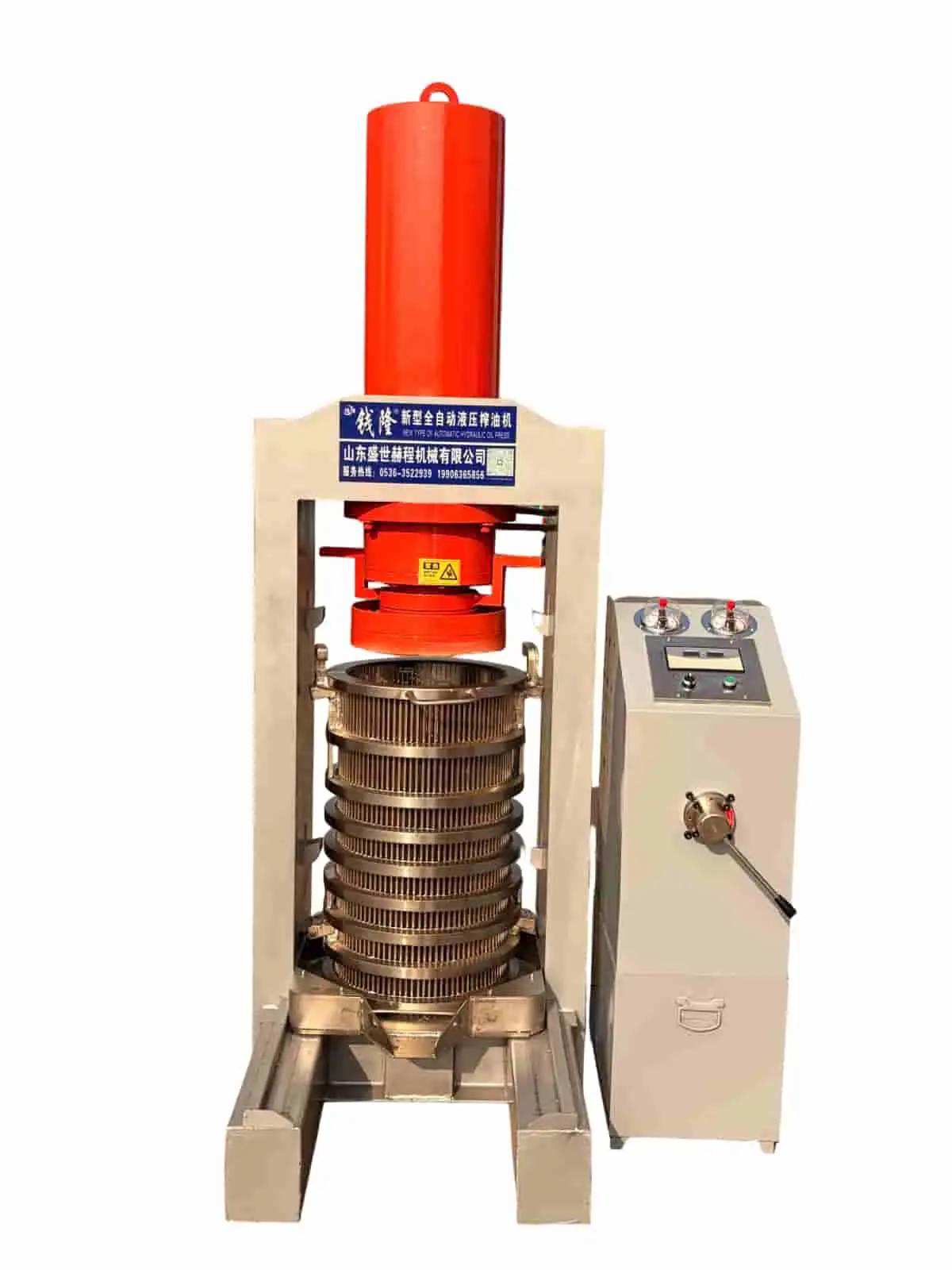
Seven hydraulic models from 300–630 ton — hot (300/325) and cold (355–500 class) with 100 kg max feed per batch (see spec tables).
Pressing, refining, dewaxing, filtration, filling, and supporting equipment — ODM supported for complete oil projects. Since 2008: 200+ staff, 1000+ customers served.
Project path
Real projects do not need a long directory first. Start with feed, route, and post-press handoff; after that, the factory can discuss scope directly.
Kernel grade and low-temp control
Whole seed, kernels, screened feed, moisture, and impurities change pretreatment and press rhythm.
See feed prepSmall-batch pressing
Route decides roasting, temperature, filtration, oil finish, and packaging before model comparison.
See route optionsBottle-ready finish
Output target, workshop, voltage, downstream handoff, and photos make sizing much faster.
Start almond project briefPhotos and videos first
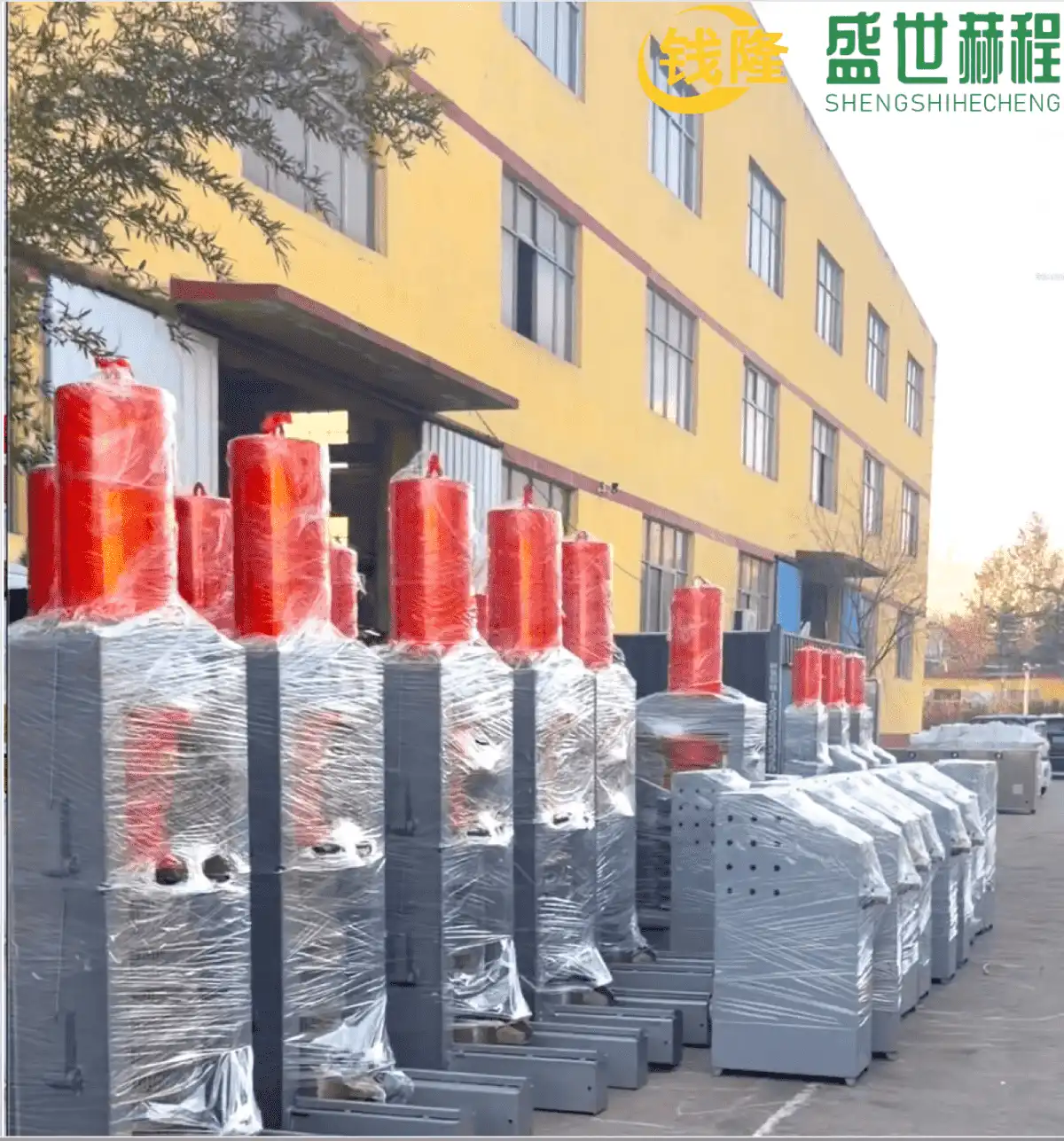
If the full brief is not ready yet, these clips show barrels, pressing, cake discharge, workshop layout, larger models, and export delivery so the scope becomes easier to place.
Seeing the barrel, frame, and loading space makes capacity, shifts, and model selection easier to discuss.
Useful for checking footprint, access aisles, loading side, cake discharge, and filtration position.
Bagging, bins, or crushing after discharge changes press-room flow and by-product value.
When the project moves beyond trial batches, workshop height, lifting, loading, and filtration need to be checked together.
For export projects, voltage, crate packing, spare parts, installation mode, and destination port should be aligned early.
Fast startup after arrival depends on power, foundation, lifting, and staffing being confirmed before shipment.
Almond oil splits into two worlds at the kernel table. Blanched kernels produce pale, mild oil prized by cosmetic formulators and gourmet chefs. Natural kernels with skins yield a warmer, more aromatic oil with deeper color. The skin decision changes filtration, color target, and finished-oil expectations — it must be stated before any pressing discussion.
Use this local workshop video as the press-cell reference until a dedicated almond clip is added. The almond copy around it stays focused on low-temperature cycles, clean lots, and short-run quality.
Almond oil pressing is closer to artisan food or cosmetic-ingredient production than to industrial oilseed processing. The press cell must maintain low temperature, gentle rhythm, and clean batch separation. Multi-client or multi-SKU operations need fast, traceable changeovers.
Culinary almond oil cares about flavor, clarity, and bottle presentation. Cosmetic-grade oil cares about lot consistency, peroxide value, and repeatable specifications. These are different downstream businesses that happen to share the same hydraulic press.
Premium process
Almond oil is a dual-market product: culinary and cosmetic. Both routes start at the same kernel grading bench and share the same hydraulic press, but they diverge on skin status, filtration target, testing protocol, and packaging format. This split needs to be clear from the start so the project boundary is defined correctly.
Blanched almonds produce pale, mild oil favored by cosmetic formulators. Natural almonds with skins yield warmer, more flavorful oil for culinary use. The skin decision changes oil color, filtration difficulty, and finished-oil expectations.
Almond oil flavor and cosmetic stability are both heat-sensitive. Pressing must keep exit temperature low, cycles gentle, and batches cleanly separated — especially when the line serves multiple clients or SKUs.
Culinary almond oil is filtered for visual clarity and shelf appeal. Cosmetic-grade oil is filtered to meet peroxide value, color index, and lot-to-lot consistency specifications. Different end uses, different filtration protocols.
Culinary almond oil goes into dark glass bottles with branded labels. Cosmetic-grade oil goes into sealed drums or IBCs with batch certificates. Private-label projects need short-run filling with fast changeovers.
Compact specialty line
An almond hydraulic line is a compact, quality-focused installation designed for high-value small batches. The modules — kernel grading, gentle pressing, dual-path filtration (culinary vs cosmetic), sample retention, and short-run filling — must be designed for traceability and clean changeovers, not maximum throughput.
Use this workshop clip as the local video reference for clean batch handoff. Almond projects still need their own notes for cleaning, retained samples, and quality sign-off before the next run starts.
This framing is about right-sized modules for high-value batches, not a vague promise of a full standard line.
Blanched and natural kernels produce different oils. The grading bench tracks skin status, kernel grade, origin, and storage condition so that downstream filtration and packaging can be matched to the correct product specification.
Culinary oil needs visual clarity and flavor preservation. Cosmetic oil needs peroxide control and color-index consistency. A single filter bank cannot optimize for both. The dual-path module lets one press serve two markets.
Almond oil projects often serve multiple clients or SKUs on the same press. The filling station must handle dark-glass bottles for culinary retail, sealed drums for cosmetic supply, and private-label short runs — with clean, documented changeovers between each.
Market lanes
The same almond press can serve three very different businesses. A gourmet food brand, a cosmetic-ingredient supplier, and a boutique private-label operation each need different finish standards, testing protocols, and packaging formats.
Flavor-forward oil from selected kernels, polished to retail clarity, filled into dark glass with branded labels. The flavor story and bottle presentation justify the premium price.
Consistent lots from blanched kernels meeting peroxide value, color index, and fatty-acid profile specifications. Sealed drums or IBCs with batch certificates and COA documentation. Lot-to-lot consistency defines the value.
Multiple brand owners share the pressing line with batch segregation, dedicated cleaning between lots, retained samples, and fast changeovers. The ability to handle short runs with traceable documentation defines this service.
Project brief
Almond projects are not defined by throughput. They are defined by kernel type (blanched or natural), end-use market (culinary or cosmetic), and the finish standard that determines filtration, testing, and packaging. A concise brief covering these inputs gets a better first quotation.
End-use calibration
Almond oil should be read as an end-use decision: food-grade almond oil and cosmetic almond oil can share a hydraulic press family, but they do not share the same filtration, testing, packaging, or changeover discipline.
Blanched kernels aim for a lighter, milder oil; natural kernels carry warmer color and stronger almond character. This changes filter and bottle targets.
Peroxide value, color, odor, retained samples, and sealed drums become part of the equipment conversation when the oil enters cosmetic supply.
Private-label almond oil often runs small batches. Changeover, cleaning records, and bottle formats should be scoped before the press is ordered.
Almond hydraulic projects usually revolve around premium batches, kernel condition, and end-market quality. The better machine choice depends on whether the oil is headed toward gourmet food, ingredient supply, or cosmetic-related channels.
Only sweet almonds (Prunus dulcis var. dulcis) are used. Skin-on pressing produces a more golden oil with slightly nutty flavor; blanched (skin-removed) pressing yields a paler, milder oil preferred for cosmetic applications.
Almond kernels are soft and oil-rich (50–55%), making cold pressing straightforward. 100 kg/barrel, ~2 h per barrel, residual oil ≤5%. The higher-pressure 89 Pa/cm² barrel option is rarely needed for almonds.
Cold-pressed almond cake is milled into defatted almond flour (protein-rich, low-fat) for macarons, marzipan, and gluten-free baking. Cake value can rival the oil value — handle it in food-grade conditions.
Cosmetic almond oil needs a consistent oleic/linoleic ratio (~65%/25%), peroxide value ≤5 meq/kg, and batch CoA (Certificate of Analysis). Filtration and filling must meet cosmetic-ingredient GMP standards.
Process and line path
Each section follows a practical project path so process notes, equipment scope, and project details stay connected.
Align the common questions first
These answers stay focused on low-temperature discipline, filtration cleanliness, and bottle-ready finish so the project does not collapse into equipment-only talk.
Share kernel grade, low-temperature target, filtration standard, and packaging direction so the line can be sized like a premium small-batch project.